We Don’t
Teach.

We Build
Performers.

A Manchester-born collective of active producers & DJs delivering real-world systems, coaching, and connections. Trusted by artists worldwide. Join the roster.

"The production masterclass was incredibly valuable. I finally feel confident in the studio and had my first record signed to a Buenos Aires techno label synchronic records"

— Fourfold (Andrie) DJ

Toolsevolve.Standardsdonot.Wetrainthepersonbehindthesystem.TheartistdrowninginYouTube,withnostructure&zeroprogress.

Toolsevolve.Standardsdonot.Wetrainthepersonbehindthesystem.TheartistdrowninginYouTube,withnostructure&zeroprogress.

Toolsevolve.Standardsdonot.Wetrainthepersonbehindthesystem.TheartistdrowninginYouTube,withnostructure&zeroprogress.

Toolsevolve.Standardsdonot.Wetrainthepersonbehindthesystem.TheartistdrowninginYouTube,withnostructure&zeroprogress.

Toolsevolve.Standardsdonot.Wetrainthepersonbehindthesystem.TheartistdrowninginYouTube,withnostructure&zeroprogress.

Toolsevolve.Standardsdonot.Wetrainthepersonbehindthesystem.TheartistdrowninginYouTube,withnostructure&zeroprogress.

I learnt a professional and efficient method to making true music I wanted to make in an amazing studio with advice on hand in person and online.”

— Mike R., Producer

Residents

A small selection of artists we’re working with.


Riggio Profile

Nick Parker

Producer

"I cannot believe how much I have learnt in the four hours of training I have had so far"

Riggio Profile

Nick Parker

Producer

"I cannot believe how much I have learnt in the four hours of training I have had so far"

Riggio Profile

Sean Bailey

DJ

"DJ Masterclass and it is exactly that - a masterclass. Learning so much at a brilliant pace"

Riggio Profile

Sean Bailey

DJ

"DJ Masterclass and it is exactly that - a masterclass. Learning so much at a brilliant pace"

Riggio Profile

Jules

Producer & DJ

"I finally feel like I understand what professional standards actually mean"

Riggio Profile

Jules

Producer & DJ

"I finally feel like I understand what professional standards actually mean"

Riggio Profile

Rick

Producer

"FSAs team challenges you in the right way. It’s not comfortable but it works"

Riggio Profile

Rick

Producer

"FSAs team challenges you in the right way. It’s not comfortable but it works"

Riggio Profile

Paul Riggio

Producer for Film & TV

I cannot believe how much I have learnt in the four hours of training I have had so far and how much knowledge I will have gained by the end of the course. I would not hesitate in recommending - Nick

Riggio Profile

Paul Riggio

Producer for Film & TV

There is a clear vision to foster a community of electronic music enthusiasts and creatives and a sense that the relationship doesn't stop after the course is finished. Huge respect for what they're doing! - Jules

Riggio Profile

Paul Riggio

Producer for Film & TV

Matt really helps with progression quickly, showing me skills and techniques to produce my own tracks. Also, Matt is on hand for catchups in-between sessions which are really useful and provide great benefit! 10/10!

Riggio Profile

Paul Riggio

Producer for Film & TV

Has my first lesson today and really enjoyed it. Matthew is very knowledgeable and explained everything really well. I'd recommend anyone who wants to learn or improve their dj skills get booked in with him.

One of the fastest-growing underground electronic music brands.

A product box titled "The Production Academy" displayed with a reflective surface beneath it.

Producer OS

Producer OS

Finish tracks faster with a step by step producer system.

Finish tracks faster with a step by step producer system.

Finish tracks faster with a step by step producer system.

Used by 200+ producers in 2025. Writers block system, Track Starter System, The Arrangement System + More

Lifetime access

Used by 200+ producers in 2025. Writers block system, Track Starter System, The Arrangement System + More

Lifetime access

Prices in GBP. EUR/USD approximations based on current rates—actual charged amount in £

Prices in GBP. EUR/USD approximations based on current rates—actual charged amount in £

Free Guide

Download the system used by 1,500+ producers to finish tracks faster.

Get the first system free. Start with the Saturation System and learn how working producers add weight, character, and control without damaging the mix + bonus track finisher

Get the first system free. Start with the Saturation System and learn how working producers add weight, character, and control without damaging the mix + bonus track finisher

Listen up

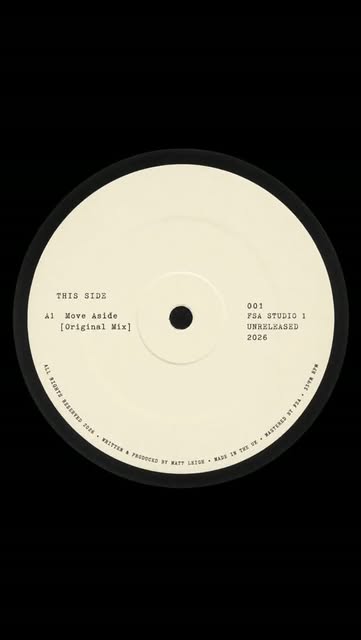
Our tracks created, arranged and mastered in our studio have been supported and played by some of the world’s biggest DJs including the Italian DJ and producer Giuseppe Ottaviani, Aly And Fila and Armin Van Burren on his ASOT radio show which gains over 43 Million listeners worldwide per podcast. What does this mean? It means we know how to create tracks that resonate with a worldwise audience and the worlds biggest DJS.

Featured Blog Posts

Image

Apr 3, 2026

How to Make Melodic House & Techno (Step-by-Step)

To make melodic house and techno, you need a strong emotional chord progression, a driving groove, atmospheric layers, and clean, controlled low end. This guide walks you through the full process from idea to finished track using techniques taught at Future Sound Academy. What Defines Melodic House & Techno Melodic house and techno combines rhythm with emotion. The key elements are: Deep, rolling basslines Emotional chord progressions Atmospheric pads and textures Clean, minimal drums Gradual arrangement and energy build Artists in this space focus on feeling, movement, and space, not just drops. Step 1: Start With a Chord Progression Everything begins with harmony. How to do it: Choose a key, often minor for emotional tone Use simple triads or seventh chords Keep progressions repetitive but evolving Example progression: Am – F – C – G Real-world tip: At Future Sound Academy, students often start with a piano or soft pad to sketch ideas before choosing final sounds. Step 2: Build a Driving Drum Groove The groove is the foundation. Core elements: Kick on every beat Closed hi-hats with subtle swing Percussion loops for movement Occasional open hats for energy Pro tip: Keep drums simple. Space is key in melodic genres. Step 3: Create a Rolling Bassline Your bass should support both rhythm and harmony. How to build it: Follow root notes of your chords Use off-beat or rolling patterns Keep sub clean and controlled Processing tips: Use sidechain compression with the kick Add light saturation for presence Keep everything below 120 Hz mono Step 4: Design the Lead or Hook This is the emotional centre of your track. Options include: Pluck synths Arpeggiated sequences Vocal chops Analog-style leads How to make it stand out: Add delay and reverb Automate filter cutoff Layer with subtle harmonies Step 5: Add Atmosphere and Texture Melodic techno is known for space and depth. Use: Pads Field recordings Noise textures Reversed sounds Example: A filtered white noise riser can slowly build tension into a drop. Step 6: Arrange the Track Properly Structure is key to keeping listeners engaged. Typical arrangement: Intro with drums and atmosphere Build with added elements First drop with bass and lead Breakdown with chords and pads Second drop with full energy Outro for DJ mixing Tip: Automate filters, volume, and effects to keep the track evolving. Step 7: Mix for Clarity and Space Clean mixing is essential in this genre. Focus on: Clear separation between kick and bass Controlled low end Balanced mids Wide but clean highs Key techniques: EQ to remove mud Sidechain compression Subtle saturation Mid side EQ for width Step 8: Add Movement With Automation Static tracks feel lifeless. Automate: Filter cutoff Reverb size Delay feedback Volume levels Real-world example: At Future Sound Academy, students learn to automate small changes over time to keep tracks evolving without overcrowding them. Step 9: Reference and Test Your Track Compare your track with professional releases. Check: Low end balance Overall loudness Stereo width Energy flow Test on: Headphones Studio monitors Car speakers Phone speakers Final Summary To make melodic house and techno: Start with emotional chords Build a simple groove Add a rolling bassline Create a memorable lead Layer atmosphere and textures Arrange with flow and movement Mix clean and controlled Use automation for energy Reference and test your track Real-World Insight from Future Sound Academy Many students struggle by overcomplicating their tracks. The biggest improvement comes from simplifying the arrangement and focusing on strong core ideas rather than adding more sounds.

Image

Apr 3, 2026

How to Make Melodic House & Techno (Step-by-Step)

To make melodic house and techno, you need a strong emotional chord progression, a driving groove, atmospheric layers, and clean, controlled low end. This guide walks you through the full process from idea to finished track using techniques taught at Future Sound Academy. What Defines Melodic House & Techno Melodic house and techno combines rhythm with emotion. The key elements are: Deep, rolling basslines Emotional chord progressions Atmospheric pads and textures Clean, minimal drums Gradual arrangement and energy build Artists in this space focus on feeling, movement, and space, not just drops. Step 1: Start With a Chord Progression Everything begins with harmony. How to do it: Choose a key, often minor for emotional tone Use simple triads or seventh chords Keep progressions repetitive but evolving Example progression: Am – F – C – G Real-world tip: At Future Sound Academy, students often start with a piano or soft pad to sketch ideas before choosing final sounds. Step 2: Build a Driving Drum Groove The groove is the foundation. Core elements: Kick on every beat Closed hi-hats with subtle swing Percussion loops for movement Occasional open hats for energy Pro tip: Keep drums simple. Space is key in melodic genres. Step 3: Create a Rolling Bassline Your bass should support both rhythm and harmony. How to build it: Follow root notes of your chords Use off-beat or rolling patterns Keep sub clean and controlled Processing tips: Use sidechain compression with the kick Add light saturation for presence Keep everything below 120 Hz mono Step 4: Design the Lead or Hook This is the emotional centre of your track. Options include: Pluck synths Arpeggiated sequences Vocal chops Analog-style leads How to make it stand out: Add delay and reverb Automate filter cutoff Layer with subtle harmonies Step 5: Add Atmosphere and Texture Melodic techno is known for space and depth. Use: Pads Field recordings Noise textures Reversed sounds Example: A filtered white noise riser can slowly build tension into a drop. Step 6: Arrange the Track Properly Structure is key to keeping listeners engaged. Typical arrangement: Intro with drums and atmosphere Build with added elements First drop with bass and lead Breakdown with chords and pads Second drop with full energy Outro for DJ mixing Tip: Automate filters, volume, and effects to keep the track evolving. Step 7: Mix for Clarity and Space Clean mixing is essential in this genre. Focus on: Clear separation between kick and bass Controlled low end Balanced mids Wide but clean highs Key techniques: EQ to remove mud Sidechain compression Subtle saturation Mid side EQ for width Step 8: Add Movement With Automation Static tracks feel lifeless. Automate: Filter cutoff Reverb size Delay feedback Volume levels Real-world example: At Future Sound Academy, students learn to automate small changes over time to keep tracks evolving without overcrowding them. Step 9: Reference and Test Your Track Compare your track with professional releases. Check: Low end balance Overall loudness Stereo width Energy flow Test on: Headphones Studio monitors Car speakers Phone speakers Final Summary To make melodic house and techno: Start with emotional chords Build a simple groove Add a rolling bassline Create a memorable lead Layer atmosphere and textures Arrange with flow and movement Mix clean and controlled Use automation for energy Reference and test your track Real-World Insight from Future Sound Academy Many students struggle by overcomplicating their tracks. The biggest improvement comes from simplifying the arrangement and focusing on strong core ideas rather than adding more sounds.